What families say
Students who came in nervous — and left confident
The students from the video, in their own words.
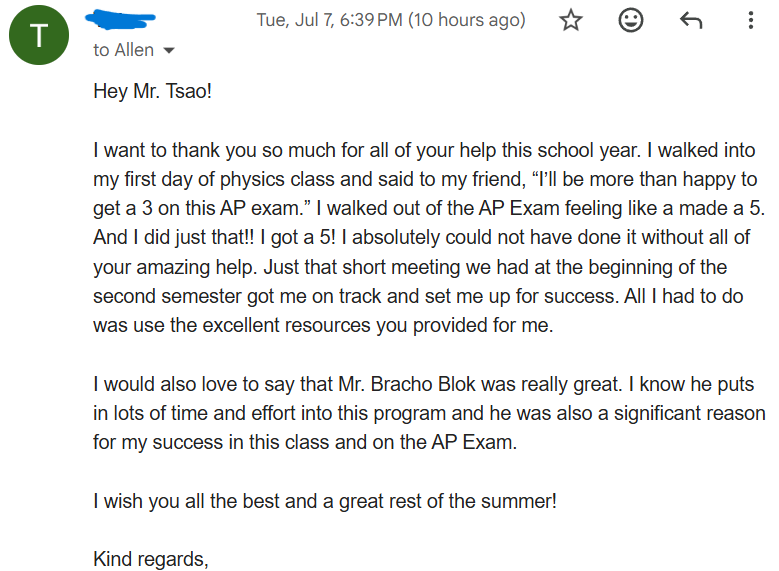
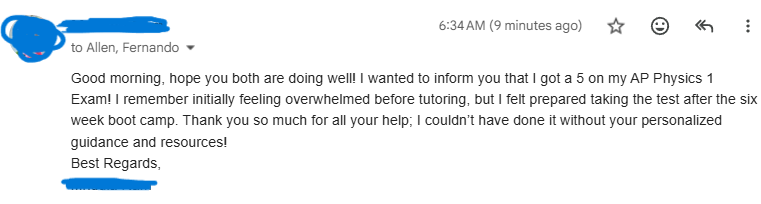
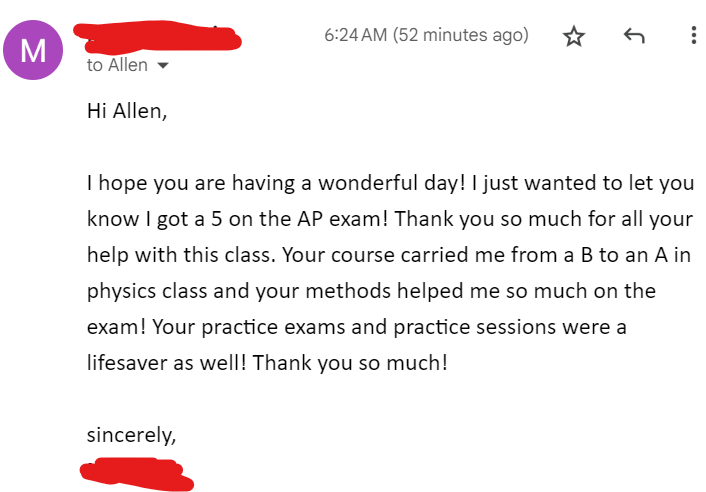
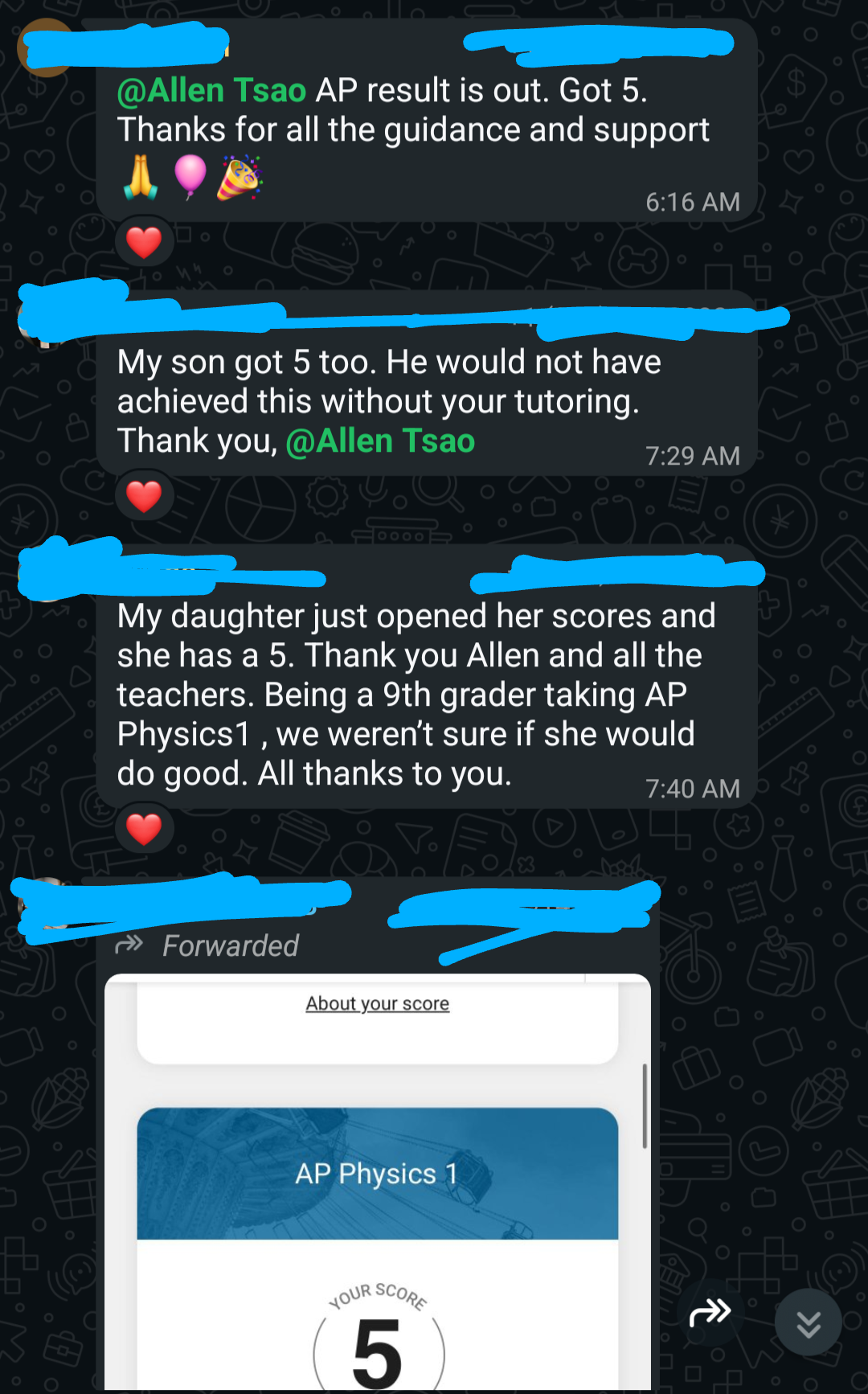
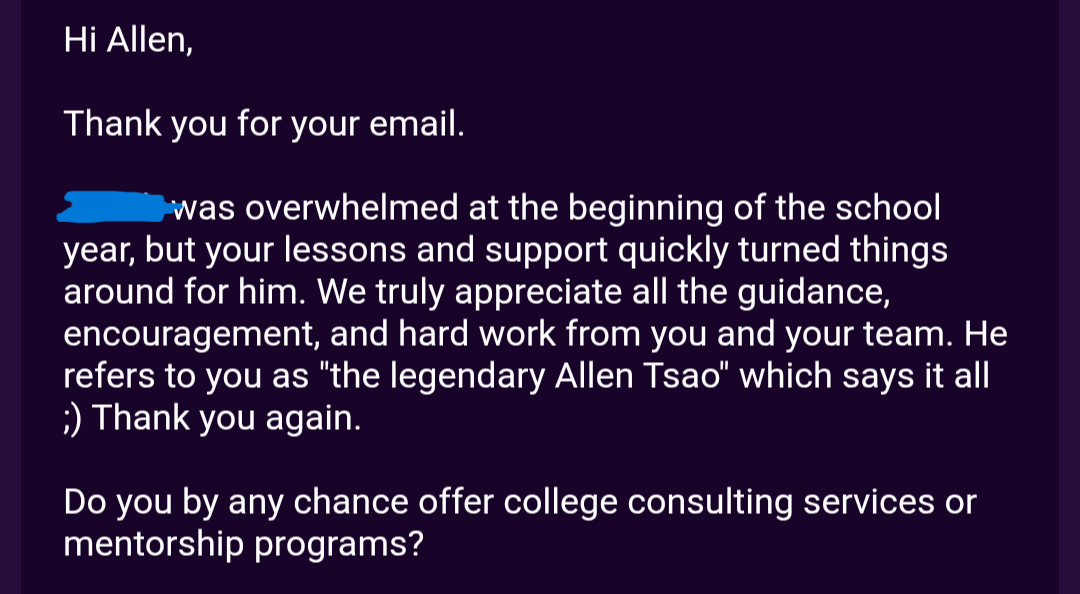
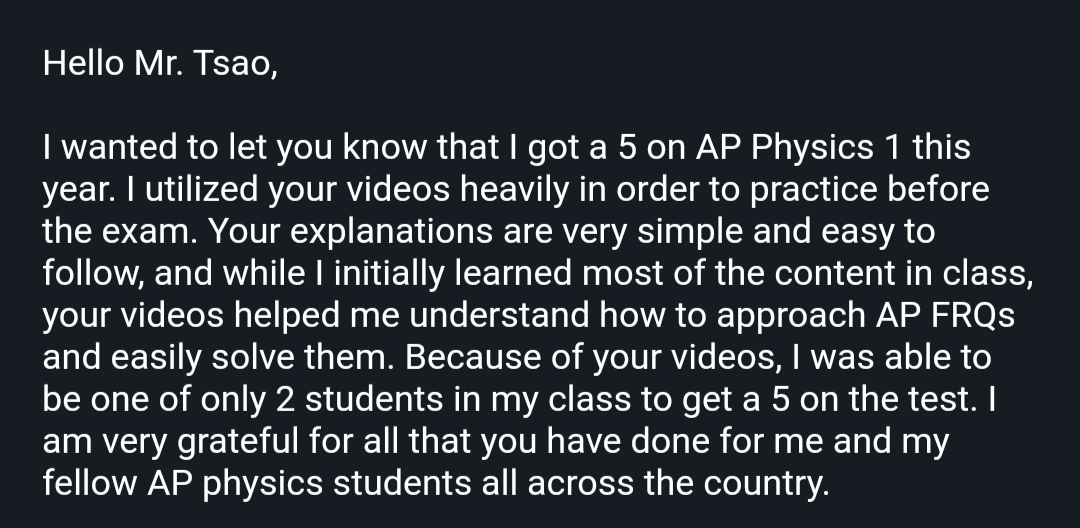
Tap any image to view it full size.
That's where grades slip and a confident kid suddenly decides "I'm not a physics person." Our 3-week August Fast-Track builds the foundation — and the problem-solving process — so your teen walks into class already ahead.
3 weeks · recorded lessons + live practice · ~5 students per instructor · taught by our coaching team.
For a lot of kids, the May exam isn't the hard part — some say it felt easy. It's the class, especially the first month or two, that's brutal. Three reasons why:
AP Physics 1 doesn't test what your teen knows — it tests whether they can break down a problem they've never seen before. That's not a fact to memorize; it's a skill. And most classrooms never teach it directly.
Most students get the concepts. They freeze when a problem looks a little different from the example. That's the real skill the class tests — and almost nobody teaches it directly.
Most students have never seen physics, and they're dropped straight into a college-level course. Deep end, day one.
Unit 1 feeds Unit 2, which feeds Unit 3. If the foundation — kinematics, forces, vectors — is shaky, everything after gets harder while new material keeps coming.
Waiting until October means emergency tutoring — often $80–$150 an hour — when there's less time and it costs more. Piling on homework often means practicing the same setup mistake five times. Re-explaining concepts doesn't help when concepts were never the issue. None of them close the real gap: no one has taught a reliable process for breaking down a problem.
Not "here's how to do this one problem" — the step-by-step way to break down any problem, whether it's easy, hard, or one we've never seen on this year's exam. Once a student owns the process, a hard problem isn't scary; it's the same steps with a trickier setup.
Your teen works problems on their own whiteboard while an instructor watches the work as it happens — and catches a wrong turn the moment it happens, before it becomes a habit. About 5 students per instructor, so nobody gets lost.
Recorded teaching lessons your teen watches on their own schedule, plus live practice sessions running multiple times a week.
Within a day or two of enrolling, we map out exactly which recorded lessons to watch and which practice sessions to hit each week — tailored to your teen's start date and summer schedule, not a template.
The full teaching lessons are recorded — watch on your own schedule, pause and rewind as needed. Binge a few to catch up or spread them out. Same content, same instructor, no live session required.
Where the real learning happens. Sessions run multiple times a week — your teen works on their own whiteboard while an instructor watches live, with feedback on the approach and problem-solving steps, not just right or wrong answers.
Extra practice any time on top of the live sessions: a self-serve library of AP-style multiple-choice and free-response questions by unit and topic. MCQs give instant feedback and a video walkthrough; free-response gets immediate AI feedback scored against a custom per-question rubric, a full video solution, and an optional personal instructor review if your teen wants it.
We don't cram the whole course. We go deep on Unit 1 (kinematics) and the start of Unit 2 (forces) — about the first two months of school, ~20% of the course. Own that, and the year feels different.
Multiple session times every week — come to any, or extra ones for more practice. Lectures are recorded and whiteboards save progress, so trips, camps, and tournaments don't set anyone back.
Work happens live, not skippable homework. Every problem is marked "correct" or "try again," progress is tracked, and a dedicated success coach checks in if a student goes quiet.
In our 2026 cohort, 93% of students scored a 4 or 5 — most of them 5s, and 100% scored a 3 or higher. Our students typically post the highest first-test scores in their class and hold solid A's.
Came in nervous with no physics background. After we built up her problem-solving, she scored 91% on her Unit 3 exam when the class average was 60%. That confidence carried her all year.
Came in having forgotten everything from middle-school physics. The head start meant she was scoring well even before her teacher curved the test — and walked into the AP exam actually knowing her stuff.
The students from the video, in their own words.
The June cohort has filled up. The 3-week August Fast-Track covers the same foundation, at the same $375 — and it's enrolling now.
What you'd pay if you bought each piece on its own:
✅ Risk-free first week: try the full first week of live sessions — if you don't find it beneficial, just email us and we'll refund 100%, the full $375. No hard feelings.
A little focused work each week beats last-minute cramming. Start in summer and you lock in advantages no one who joins later can get.
$375 for the full fast-track — locked in before fall pricing rises.
Continue into the school year at $400/mo — fall joiners pay $450.
Only summer students can prepay the school year for 25% off.
Walk into class ahead on Unit 1 — and stay ahead all year.
We trained it on exactly how the summer program works — schedule, format, pricing, what's covered, and whether it's the right fit for your teen. Ask it anything, anytime.
You're covered. Try the full first week of live sessions — if you don't find it beneficial, just email us and we'll refund you 100%, the full $375. No hard feelings. We'd rather you try it risk-free than wonder.
Two parts. Your teen watches the recorded teaching lessons on their own schedule — concepts and how to break down problems, with pause and rewind whenever they need it. Then they attend live practice sessions, which run multiple times a week: your teen works on their own whiteboard while an instructor watches live and steps in the moment something goes sideways. That's where most of the learning happens.
No — this is the question we get most. There are multiple session times every week, lectures are recorded, and whiteboards save progress. Miss a week and your teen can watch the recorded lecture and make up the practice by coming to a couple of extra sessions when they're back. Nobody falls behind for taking a trip.
Two things. First, we teach an explicit, step-by-step process for breaking down any problem — not just how to do one specific question. Second, the practice is live with real-time feedback, so a mistake gets caught on the first problem instead of repeated across five homework problems before anyone notices.
Honestly, no — the only way to guarantee it would be to take the test for them. What we can tell you: in our 2026 cohort, 93% of students scored a 4 or 5, most of them 5s, and every student scored a 3 or higher. The students who get 5s are the ones who show up and do the practice; we give them everything they need to succeed.
The fast-track is $375. If your teen loves it and wants to continue into the school year, we keep going the same way and add drop-in office hours for schoolwork, labs, and tests. The school-year portion is about $400/mo month-to-month (no year commitment, cancel anytime), or 25% less if you pay the year up front (no refunds on the prepaid year). You decide after you've seen the summer in action.
Three focused weeks this August — same foundation, same outcome — and your teen walks into AP Physics 1 already ahead. $375, backed by our 100% first-week guarantee.