AP Physics 1, taught as a process. Live teaching lessons, unlimited feedback, and help with their actual class — on whatever schedule their week allows.
Watch this one together — parent and student. It's the honest version, including who this isn't for.
Taught by our team of experienced AP coaches — founded by Allen Tsao (Electrical Engineering, UC Berkeley & Stanford).
| 2026 AP Physics 1 Exam Scores |
5 | 4 | 3 | 2 | 1 |
|---|---|---|---|---|---|
| Our students | 60% | 33% | 7% | 0% | 0% |
| National average | 19% | 24% | 25% | 15% | 17% |
Past student results. Not a guarantee.
The most common question I get is whether it's too late. It isn't — but the answer isn't "try harder."
Students who join behind skip the teaching lessons at first. They don't run two tracks at once, because that's how a kid who's already underwater stays underwater. Instead, they work a catch-up track:
30 to 40 minutes each, built around worked examples. Not four hours of lecture recordings. The efficient version.
Live practice on older units, running at least twice a week. After January, four times a week.
The unit they're reviewing, and whatever their teacher assigned this week — same place, same instructors.
How long it takes depends on how far behind they are and how quickly it clicks. Their success coach maps that out in the first week — so they're not guessing, and they're not doing it alone.
Your teen has always been able to out-work a problem. AP Physics 1 is the first class where that stopped working — and the private conclusion they're drawing is that they aren't smart enough.
For most students this is their first physics class ever — taught at a college pace from week one.
Unit 1 feeds Unit 2, which feeds Unit 3. One shaky unit makes everything after it harder while new material keeps coming.
Most students understand the concepts fine. They stare at a problem and don't know where to begin — and that's the specific thing the class actually tests.
Every unit has its own written, repeatable set of problem-solving steps — not "here's how to do this one problem." Your teen always knows how to start, and when they're stuck they know exactly which step they're stuck on. "I'm stuck" becomes "I'm stuck on step 3," which an instructor fixes in thirty seconds.
Not a menu of tiers. Enrolling gets all of it, plus the six-week AP exam prep block in the spring — no upgrades, no add-ons.
Shown in your own time zone, with Pacific alongside.
Teaching lessons three times a week, six practice sessions across all seven days, and office hours most days. See the full weekly schedule →
Most sessions land between 4 and 8pm Eastern. Monday and Thursday practice sessions run later for East Coast families — but the weekend pairings work cleanly in both time zones.
The students who do best here are rarely the ones with spare time. They're the ones carrying four other APs, a sport, and a job. So nothing in this program depends on your teen being free at one particular hour.
The same lesson runs Saturday, Sunday, and Monday. Missing one isn't a makeup — the other two are the same class.
Six practice sessions spread across all seven days. Take the weekend pair, take Tuesday, take whatever's still standing that week.
Every lesson is recorded with notes posted after, and unit review sessions run all year to close whatever opened up. Nothing has to be made up in real time.
They snap a photo of the problem and post it. A personalized video walkthrough comes back — usually within two to three hours, never more than twelve.
None of this is a concession we make for the busy kid. It's the design — because the student who needs this most is usually the one with the least room left in their week.
One hour a week can't cover teaching the concepts and working problems. And getting stuck is the normal state of learning physics — so the real question isn't how good that hour is. It's what happens Wednesday night when they're stuck and the next session is Sunday. Either they wait four days, or you buy more hours.
Allen used to do one-on-one. Students needed many hours a week, the cost climbed fast, and they improved more slowly than students in this program. We gave up that revenue because the results weren't there.
A student who only ever learns one-on-one never learns how to ask for help in a room with other people. In college — which you're about to spend an enormous amount on — no professor sits down with your teen privately. They go to office hours. They ask a TA. They speak up among peers.
Allen has had former one-on-one students come back to him from college. Not because the physics was hard, but because they'd never learned how to engage in a class.
The signup queue, the practice rooms, the anonymous question box — those aren't compromises. That's a kid learning to raise their hand, on our dime instead of yours.
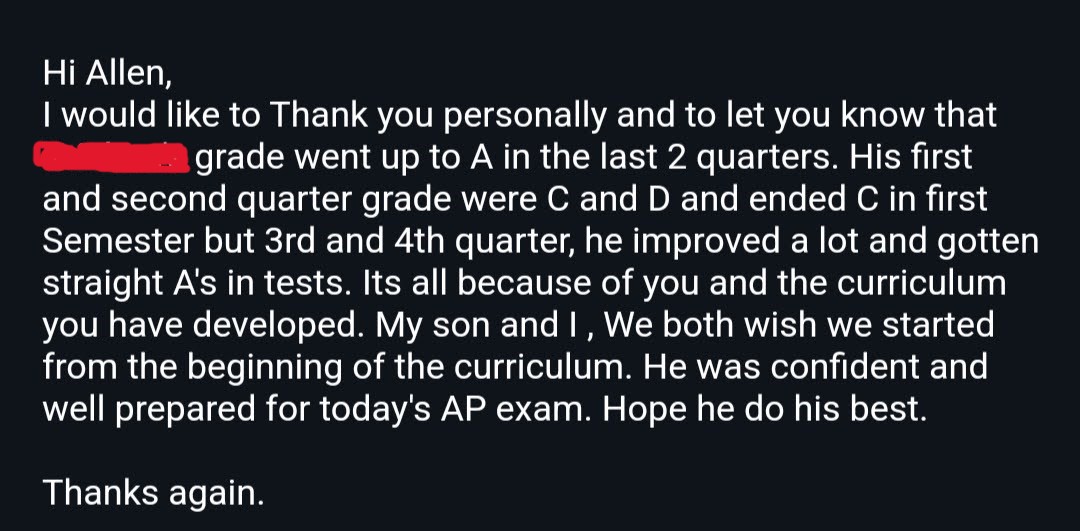
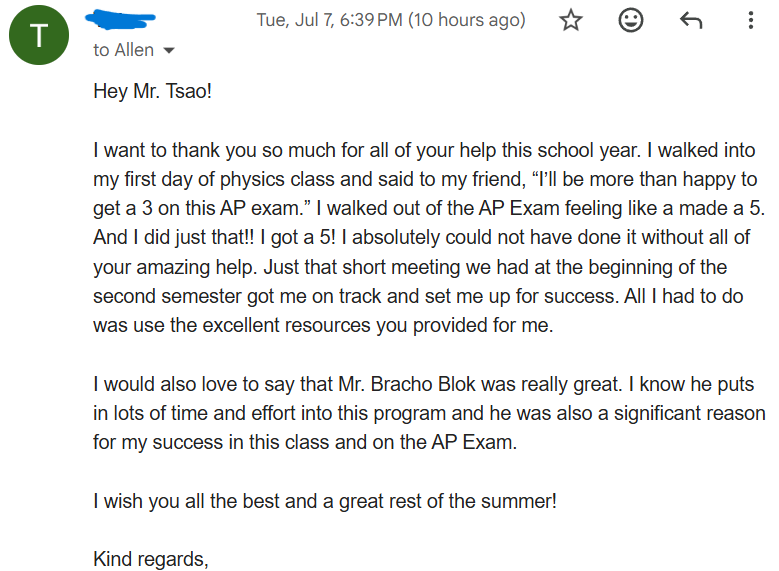
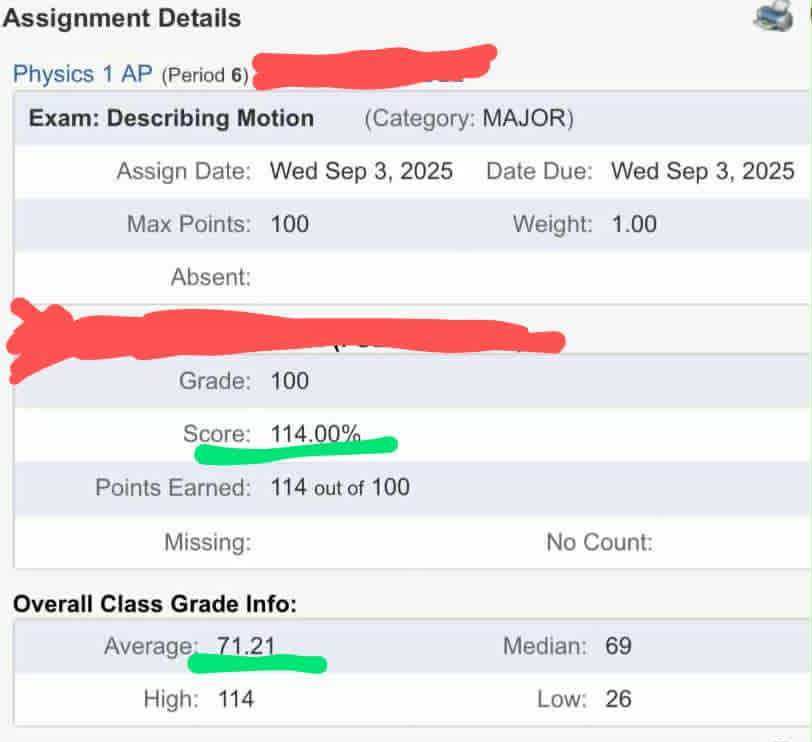
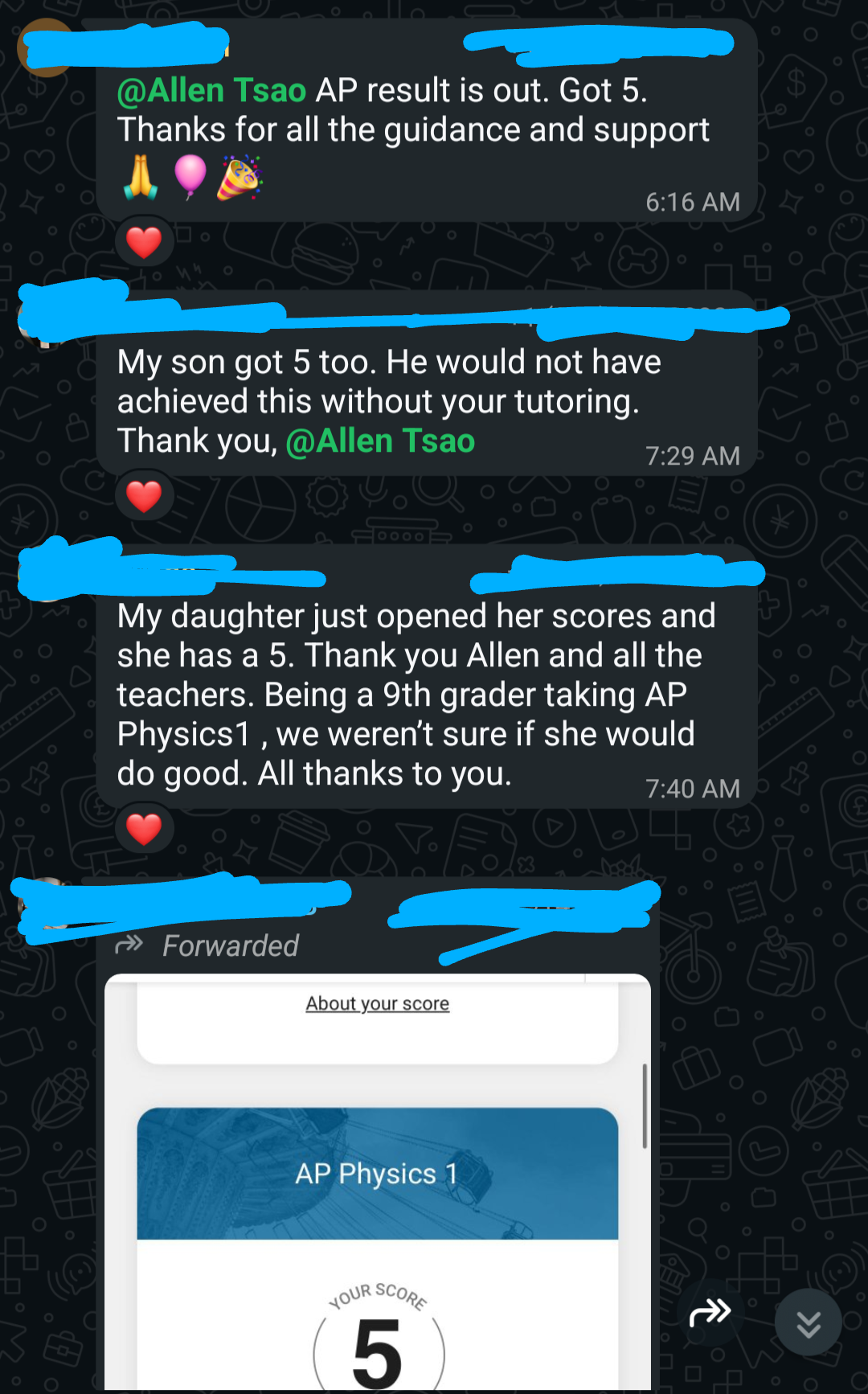
Everything on this page is included — all five parts, the success coach, and the spring AP exam prep block. There are no tiers and nothing to upgrade. Start with 30 days, and decide from there.
Not a subscription and not a tier list. $500 gives your teen 30 days of full program access — every lesson, every practice session, the success coach, all of it. Nothing else is charged unless you decide to keep going.
Enrollment is by call only. Allen will tell you honestly whether this is a fit before anyone pays anything — and he’d rather say no than take your money.
You have two weeks to get every dollar back. We don't ask you to wait and hope — inside those first two weeks your teen gets their plan, sits in real teaching lessons, and gets real feedback on their own work. If they aren't moving, tell us before day 14 and we refund the full $500. No fees held back, no hoops. After day 14 the 30 days aren't refundable, and we don't do partial refunds — but you're never charged anything more unless you reply to that email and tell us to continue. If you have concerns at any point, reach out to Allen directly.
Every family starts the same way: a short call with Allen. He'll tell you honestly if it's not a fit — we don't take money for a program that won't work for your teen.
We don't offer it, and it's a deliberate choice — one hour a week can't hold both teaching and practice, we've tried it and students improved more slowly, and it doesn't build the skill of asking for help in a group that they'll need in college. Full explanation →
They skip the teaching lessons at first and work a catch-up track instead — short recorded unit reviews, live review sessions on older units, and office hours covering both. Their success coach maps the timeline in the first week. Full explanation →
That depends on your teen and what they're aiming for — their success coach builds the plan with them in the first week, and adjusts it when the week goes sideways.
What doesn't vary is that the schedule bends around them. The same lesson runs three times a week, practice runs across all seven days, everything is recorded, and help doesn't wait for the next session. A tournament weekend doesn't cost them the material. See how it flexes →
We follow the official AP Physics 1 unit order, and it's rare for a school to diverge much, since a lot of physics has to be taught in sequence. When it does happen, students build their own plan and use office hours for whatever their class is doing that week.
For what it's worth: we have students who never take the class in school at all. They study entirely with us and do very well on the exam.
The core teaching lessons are, and that's on purpose — they're there for families who can't afford tutoring. What's missing from YouTube is practice, feedback, and coaching.
A motivated student can absolutely learn this on their own. Many do every year. It just takes more time and more effort. If they want to get there faster, feedback is what does it.
No. We use an AI grader for instant feedback, and it's trained on Allen's own problem-solving steps rather than being a general-purpose model — so it breaks a problem down the way he would. But every part of the AI system has a human backup, and every free-response submission can be reviewed by a real instructor within 24 hours.
Confidence usually moves in the first week or two. Grades take longer and are harder to predict — tests are lumpy, and gaps from earlier units take time to repair.
That's exactly why the guarantee is two weeks and not two days: it's long enough for your teen to get a plan, sit in real lessons, and get real feedback on their own work. If they haven't started moving by then, tell us before day 14 and we refund the full $500 — no fees held back.
We don't promise a score. The one thing that reliably predicts whether a student improves is whether they engage — whether they ask questions, ask for help, and practice. That's what the success coach is there to make happen.
You pay $500 today, and that covers the first 30 days. At the end of the 30 days we email and ask whether you want to continue. What continuing looks like, including what it costs, is something Allen goes over with you on a call, so it's a conversation rather than a fixed number on a page. It's not a subscription and nothing renews on its own — we never charge the card on file without your go-ahead.
The first two weeks are fully refundable, in full and with no fees held back — so you can stop inside two weeks and pay nothing at all. After day 14 the 30 days aren't refundable, and we don't do partial refunds. If you have concerns at any point, reach out to Allen directly.
Any time. Enrollment is rolling, and waiting doesn't get you a better deal — September or February, the first 30 days are $500.
What waiting costs you is runway. It leaves more material for your teen to close on their own before they get here, on top of whatever the class is throwing at them that week.
Be aware that we finish all the AP Physics 1 content in March so the spring is exam prep. If you're finding us in April, it's genuinely too late, and we'd rather tell you that than take your money.
Yes, at no extra charge — it's never a separate purchase. Content finishes in March precisely so spring is exam prep: six weeks on every free-response type and how to attack it, multiple-choice strategy, and three full-length practice exams that we grade and return with a specific accounting of where the points went. See what's included →
This is exactly who the flexibility is built for. The same lesson runs three times a week and is recorded; practice sessions run across all seven days; office hours cover weekends and weekday evenings. A tournament weekend costs them nothing. And when they're stuck at 11pm on a Tuesday, they snap a photo and get a video walkthrough back — usually in 2–3 hours, never more than 12. Nobody falls behind for a tournament. See how it flexes →
It starts with one call. Before you book it you’ll watch a short video and answer a few questions — the most important one being the single biggest problem your teen is running into right now. That’s what the call is built around.
On the call, Allen goes through your teen’s situation with you — what the class is doing, where they’re stuck, what their week actually looks like — and the two of you build the plan for solving that problem.
Then there’s one bar, and it’s a high one: you have to be 100% confident that plan will work for your teen. Not hopeful, not willing to give it a shot. Confident. If you are, you can get them signed up on that call and started. If you’re not, you don’t — and Allen will tell you honestly and point you toward what would help instead.
We hold that bar because of the guarantee. We refund the first two weeks in full if your teen isn’t moving, and a parent who isn’t sure pulls the plug three weeks in anyway. We’d rather lose the sale than take money from a family that isn’t certain.
Immediate access, onboarding emails to get oriented and join the online community, and your teen's success coach reaches out within 24 hours to build their individualized study plan — which units, at what pace.
One call. Allen goes through your teen's situation with you and you build the plan together — and if you're 100% confident it'll work for them, you can get started right there. If you're not, you don't, and he'll tell you honestly where else to look.
A few questions first, then pick a time. You'll see the price before you book — he'd rather say no than take your money.We get the best results with students who are at least an eight out of ten committed to doing well in this class. If your teen is one of those — let's get to work.
 BOTHELL STEM COACH